What a Standing Seam Roof Actually Is
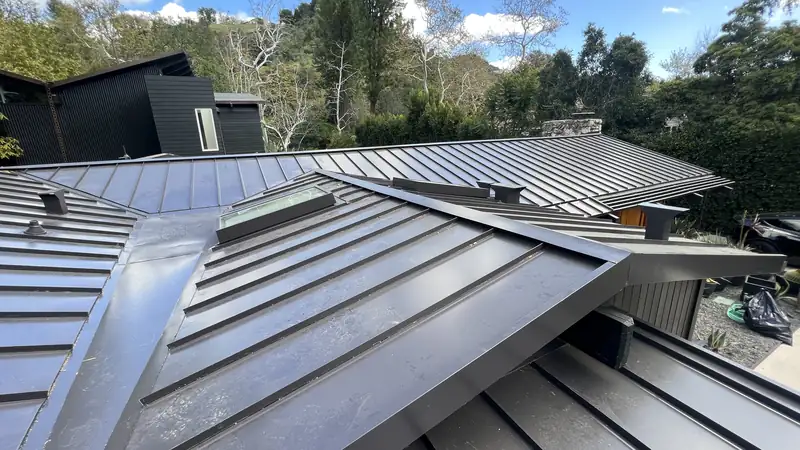
Most people picture a metal roof as corrugated sheets screwed to a barn. A standing seam roof is a different system. Each panel is a flat pan of steel or aluminum, usually somewhere between 12 and 18 inches wide, with its two long edges turned up. When the next panel goes on, those turned-up edges overlap and lock together into a seam that stands above the flat of the roof. That raised seam is where the name comes from, and it is where the water is not.
The panels are fastened to the roof deck with clips that sit inside the seam. The clip is screwed to the deck, and the seam closes over it. The result is a roof with no exposed fasteners in the flat of the panel. On a screw-down metal roof, every screw head has a rubber washer that ages in the sun and eventually needs attention. A standing seam roof avoids that problem by design.
For a Brentwood home that matters for a simple reason. The roof is a long-term investment on a house that is usually a long-term hold. A system that does not depend on hundreds of small rubber washers is a system with fewer things to check.
Snap-Lock and Mechanically Seamed Panels
There are two ways the seams can be closed, and the choice depends mostly on the pitch of your roof.
| Seam type | How it closes | Where it fits |
|---|---|---|
| Snap-lock | The edge of one panel snaps over the edge of the next by hand. | Steeper roofs, which describes most traditional homes in Brentwood Park and Brentwood Glen. Manufacturers typically call for a pitch of around 3:12 or more. |
| Mechanically seamed | A seaming tool folds the two edges together once or twice along the full length of the seam. | Lower-slope roofs, such as many mid-century homes in Crestwood Hills, and any roof where the extra water resistance of a folded seam is worth having. Manufacturers rate these for much lower pitches. |
We confirm the pitch of every roof plane at the estimate and follow the panel manufacturer's minimum slope for whichever system we recommend. On a house with both steep and low sections, it is common to use the profile that suits the lowest plane so the whole roof matches.
Why We Form the Panels Ourselves
A lot of metal roofing is ordered from a supplier in stock lengths, then lapped end to end on the roof wherever a run is longer than a panel. Every lap is a joint that has to be sealed. We do it differently. Our shop in Van Nuys runs the coil through a roll former and produces each panel at the exact length of the run it is going on, so on most Brentwood homes a panel goes from eave to ridge in one piece.
Forming in-house also means:
- Trim, flashing and edge metal are bent from the same coil as the panels, so the color and finish match exactly.
- If a measurement on site turns out different from the drawing, we can form a replacement panel without waiting on a supplier.
- The people forming the panels and the people installing them work for the same company, so nothing gets lost between the two.
Getting long panels onto a Brentwood street takes planning. On the flat grid south of Sunset it is usually simple. On the narrow canyon roads, such as Mandeville Canyon Road or the streets climbing out of Kenter Canyon, we check access, parking and where panels can be staged during the estimate visit, not on install day.
Steel or Aluminum
Standing seam panels for homes are generally made from one of two metals.
- Galvalume steel. Steel coated with an aluminum and zinc alloy that protects it from corrosion. It is the most common base metal for residential standing seam and suits most of Brentwood.
- Aluminum. Does not rust, which is why it is often chosen right on the coast where salt spray is constant. Brentwood sits a few miles inland from the ocean, so for most homes here the choice comes down to the design, the panel profile and the finish rather than salt exposure alone.
Panel thickness is described by gauge. A lower gauge number means thicker metal. We will tell you what gauge we are quoting and why, in writing, so you can compare it against any other bid on the same terms.
Finishes and the Los Angeles Cool Roof Rule
The color on a standing seam panel is a factory-applied paint system, and the best of them use a PVDF resin, often sold under names like Kynar 500. PVDF finishes are known for holding their color in strong sun, which is a real consideration on a south-facing Brentwood roof that gets direct light most of the year.
Color is not only a matter of taste in Los Angeles. The city has required cool roofs on most new and replacement residential roofs since 2015, which means the roof surface has to meet minimum ratings for how much sunlight it reflects and how well it gives off heat. Many factory metal colors are rated and listed by the Cool Roof Rating Council, and we check the listing for the exact color and finish before you commit to it. Some darker colors meet the requirement and some do not, so it is worth knowing early.
What Goes Under the Panels
The panels are the part everyone sees, but a standing seam roof is a system. From the deck up, a typical assembly looks like this:
- The roof deck. Plywood or board sheathing, checked and repaired where needed once the old roof is off.
- Underlayment. A high-temperature underlayment rated for use under metal. Metal panels get hot in the sun, and a standard felt is not designed for that.
- Edge metal and flashings. Drip edge, valley metal, wall flashings and pipe flashings, formed to fit your roof.
- Clips. Fastened to the deck at the spacing the manufacturer calls for, which allows the panels to expand and contract.
- Panels and ridge. Panels locked together, then the ridge and hip details closed off at the top.
On a home in a Very High Fire Hazard Severity Zone, the underlayment and the closures at the eaves and ridge are also part of the fire rating. That is a big enough subject that we cover it on its own page about fire-resistant metal roofing in Brentwood.
Expansion, Noise and Other Common Questions
Does the Metal Move?
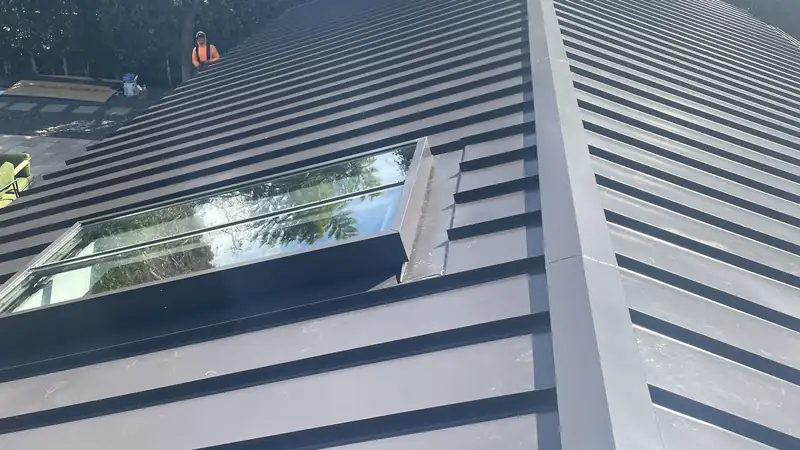
Yes. Metal grows a little when it heats up and shrinks when it cools. Brentwood can see a wide swing between a cool marine morning and a hot afternoon. The clips holding a standing seam panel are designed to let it slide slightly as it moves, so the panel is not fighting its own fasteners. This is one of the main reasons standing seam is used on high-end homes instead of screw-down panels.
Is It Loud in the Rain?
A standing seam roof installed over a solid deck with underlayment is not the tin-roof sound people imagine. That sound comes from metal laid over open framing, like a shed or a carport. Over a solid deck and an attic, most homeowners do not notice a difference.
Can I Put Solar on It?
Standing seam is one of the easiest roofs to mount solar on, because the racking can clamp to the raised seams instead of drilling through the roof. If you plan to add solar later, tell us at the estimate so we can talk about panel layout.
What About All the Leaves?
Brentwood's tree canopy is part of its character, and it drops a steady supply of leaves, bark and seed pods. Smooth panels shed most of it on their own. Valleys and the area behind chimneys still collect debris on any roof, and keeping those clear is part of normal care, especially on a hillside lot.
Why Homeowners Near Brentwood Choose Standing Seam
We hear the same reasons again and again. Some want a roof that suits the clean lines of a new modern or farmhouse home. Some are replacing a wood shake or older shingle roof on a hillside street and want a noncombustible surface. Some are tired of patching an old roof every winter. And some simply want the roof to be the last one they buy for the house. Standing seam answers all of those, as long as it is designed and installed properly.
If you want a sense of the finished look, our main site has a standing seam metal roofing overview with more of our work around Los Angeles. When you are ready, call (424) 541-1385 and we will come out to Brentwood, measure the roof and give you a written scope.